Getting something to work once is a nice start. Getting it to work reliably is the interesting bit.
A home for the experiments
My Hermes setup brings together assistants with different jobs, Telegram as a convenient way to interact, and a collection of services running around the house. WSL2, Termux, Tailscale and model routing all have their part to play.
The point is to make the tools useful in everyday life. A clever demo is fun, but a dependable way to pick up a task, hand it to the right place and check the result is much more valuable.
Where n8n fits
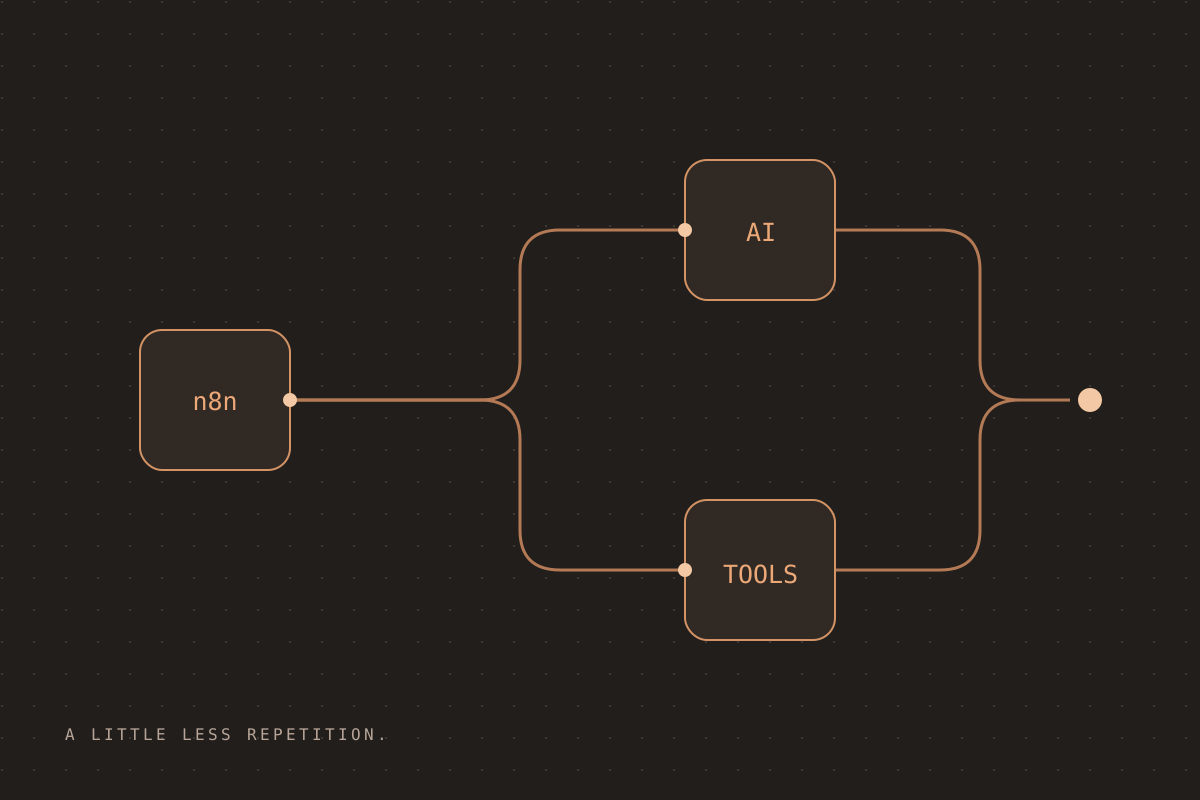
I see n8n as the wiring between services: a place to join triggers, information and actions without hiding the whole process in one enormous script. It is an ongoing part of the workbench, rather than a claim that every integration is finished.
Reliability before more features
The things I want to document here include clear task ownership, visible failures and approval requests that remain understandable after the original notification has disappeared.
A useful project note should explain what the automation does, which parts need access to another service, what happens when it fails and how I checked it. That's the standard I'm aiming for as the setup develops.
Less repetition. Clearer handovers. Fewer mysteries when something stops working.
An introduction to the workbench. This is not a downloadable setup guide or a live status report.